
Security
Service Tokens
Service tokens authenticate anonymous, privileged access to endpoints like /cron, /debug, and /update without requiring a worker session. Service tokens replace the AUTHORIZED_IPS_DEFAULTS IP allowlist and the removed DEVELOPMENT_MODE_ALLOW_DEBUG flag.
Tokens are passed either in an HTTP Authorization: Bearer <token> header or as an _authorization HTTP POST parameter – for instance, from a cronjob, monitoring tool, or deploy script. Each token can be restricted to specific endpoint scopes (e.g. cron:*, debug:status, update).
When viewing a protected endpoint in a browser, you'll be prompted to enter a token to continue.
A master service token can be configured in framework.config.php using APP_SERVICE_TOKEN. The master token's scope defaults to * (all endpoints) and can be restricted with APP_SERVICE_TOKEN_SCOPE. The master token is especially useful for /update, since worker logins are blocked until the update has finished.
Service tokens are managed from Setup » Configure » Security.
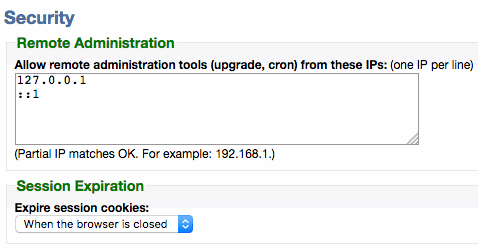
Session Expiration
This section determines the lifespan of session cookies. When a session expires, a worker will need to log in again from that particular device.
Remote Administration (deprecated)
This legacy section configured the AUTHORIZED_IPS_DEFAULTS allowlist of IPs allowed to access /cron, /debug, and /update without a session. It has been replaced by service tokens, and the DEVELOPMENT_MODE_ALLOW_DEBUG configuration option has been removed.